

|
|
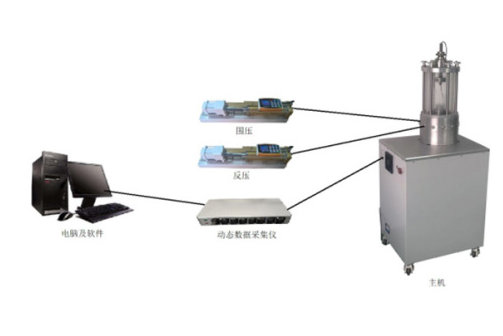
This article introduces the features and functions of the three-axis in great detail!Time:2021-10-17 The dynamic triaxial test is developed from the static triaxial test. By applying simulated active stress to the sample, it is studied whether the vibration force of the foundation is damaged by natural objects, such as earthquake, wave impact, mechanical vibration, explosion and high-speed motion. At the same time, the dynamic response of the sample under dynamic load is measured. This response is multifaceted, basically and mainly the relationship between the dynamic stress (or the ratio of the dynamic principal stress) and the corresponding dynamic strain and the relationship between the dynamic stress and the corresponding void water pressure. According to the relative relationship between the three indexes of stress, strain and pore pressure, the excavation dynamic elastic modulus, dynamic deformation modulus and damping ratio can be derived for the dynamic analysis of soil structure. At the same time, excavation dynamic strength can be calculated, including liquefaction index, liquefaction strength, stability of foundation and structure under dynamic action, as well as various dynamic elastic parameters and viscoelastic parameters, as well as the behavior of soil samples under dynamic action. Simulates the dynamic stress effects of some real-world vibrations. The dynamic triaxial replaces the traditional reaction frame type axial loading method, and adopts a unique downward loading type to apply axial pressure. Combines a triaxial pressure chamber with an axial power actuator. The system can cyclically load the sample with force/strain while monitoring the change in the pore water pressure of the sample. It consists of host, confining pressure controller, back pressure controller, dynamic data acquisition instrument, underwater load sensor, pore pressure sensor, Geotechnical Smart Lab software, computer, etc. It can complete standard geotechnical triaxial tests, conventional triaxial tests (such as U-U, C-U, CD, multilevel, stress path, etc.).
Main features: Can perform standard dynamic triaxial test as well as standard triaxial test (U-U, C-U, C-D, stress path); Axial dynamic load drive form: dynamic servo motor; Upgradable unsaturated soil test, local strain measurement, bending element test system; Range: 5Hz/10kN (or other larger range optional); Accuracy: displacement accuracy 0.07%FS (full scale 100mm), force accuracy 0.1%FS (full scale 10kN); Dynamic test waveforms: sine, square, triangle and user-defined waveforms; With automatic axial force, axial displacement, confining pressure, back pressure overload protection function; The host comes with twelve channel rings, which can be upgraded to unsaturated soil, bending element, and local strain measurement tests; Above the pressure chamber is a completely open operating space, which is convenient for sample installation; The pressure chamber is equipped with an adaptive confining pressure compensation device, which is used to compensate the confining pressure changes caused by the loading rod entering and leaving the pressure chamber. |