

|
|
Corrosion Assessment and Analysis System for Reinforced Concrete Structures
Collect
PRODUCT DESCRIPTION
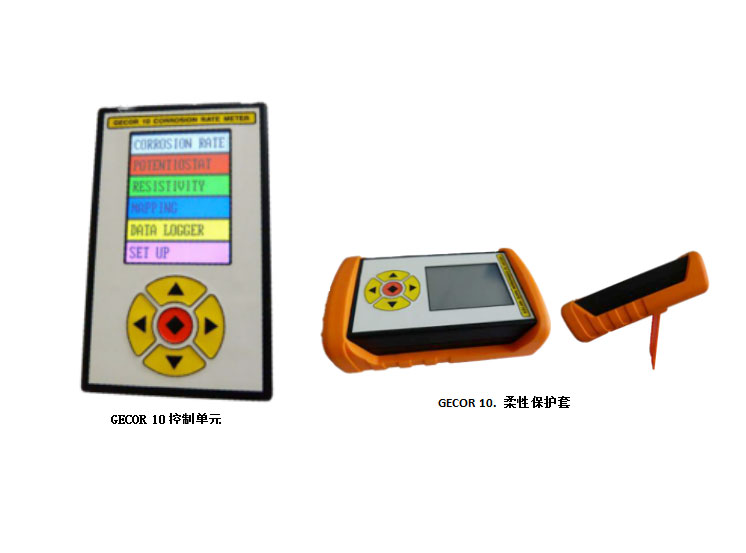
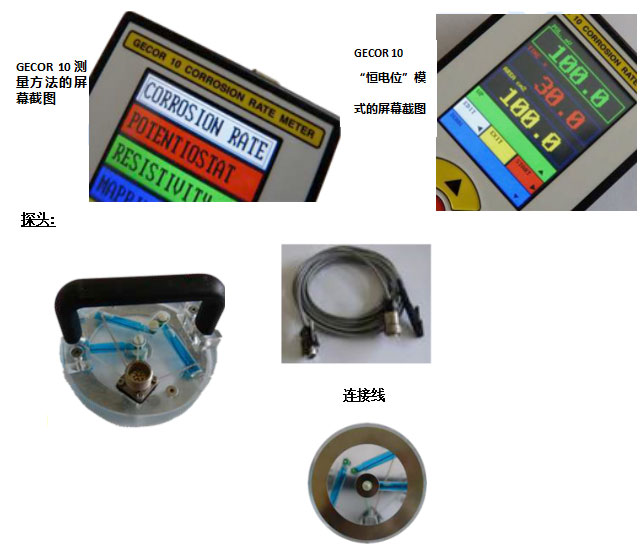
The GECOR 10 is the latest version of the GECOR corrosion gauge series known worldwide. Its main purpose is to quantify corrosion rates in large concrete structures. Lightweight and compact, the GECOR 10 features a state-of-the-art color touchscreen, a new user interface, is easier and faster than other corrosion meters, and can operate autonomously for hours on a standard 1.5V battery. This is a very sturdy device with a flexible polymer case that helps protect against bumps and falls for field engineering. The GECOR 10 is an easy-to-use device for laboratory testing with or without guard ring restrictions, linear polarization resistance measurements (LPR), and has the brightness and robustness required for field measurements in real-world structural evaluations. Optimized for laboratory users, the GECOR 10 measures three fundamental parameters related to corrosion processes that can occur in structures through highly sophisticated techniques: electrical potential, resistivity and linear polarization resistance. As a new feature, it includes a probe for measuring resistivity by the Wenner method or the four-probe method.
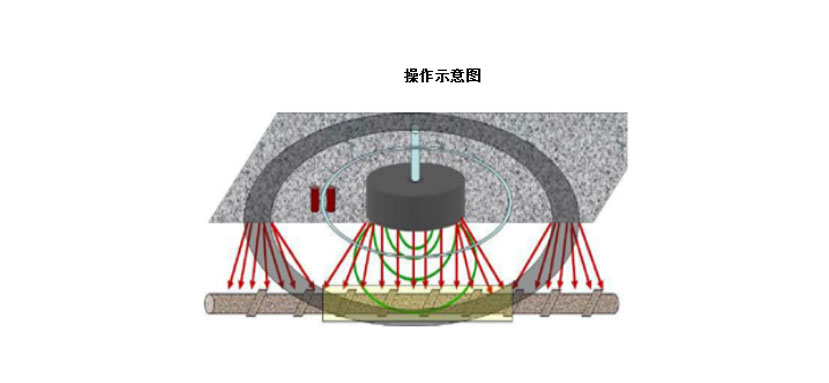
The hardware of the GECOR 10 is based on a potentiostatic-galvanostatic system capable of generating a nominal voltage of 1V and a current of 100μA with a resistance of 999KΩ. It is capable of maintaining a steady and continuous current for several minutes, which is required for actual structural measurements. What makes the GECOR 10 a tool in the measurement of large real-world structures is its ability to regulate the current applied by the guard ring, which can dynamically adapt to each structure until an appropriate limit is reached. The polarized area refers to the area below the yellow circle in the left image.
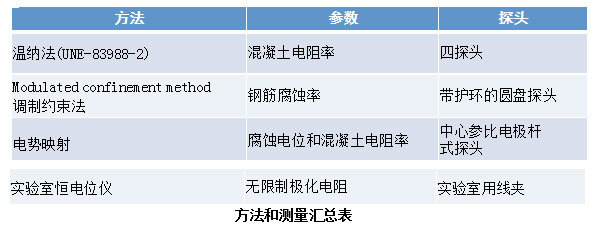
Built-in software manages the central processing unit and each detector. Direct contact probes can be used for a range of concrete-related tests based on currently available methods. Core measurement technology: Using Advanced Modulation Confinement Technology (AMCT) with an electric field controller between the central counter electrode and the guard ring, corrosion rates are measured in laboratory specimens and in real structures. This is the only commercial device that can guarantee the correct measurement of corrosion rates. This pair of electrodes controls the applied current in the center counter electrode and guard ring, enabling dynamic balancing to confine the signal within a ring concentric with the center electrode and guard ring and between the two electrodes for field control.
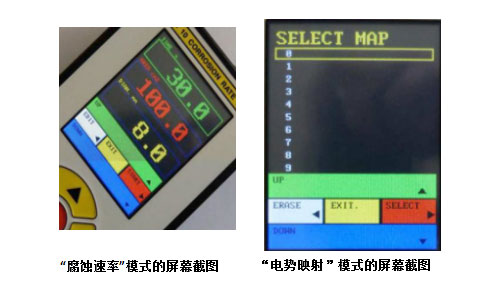
Potential Mapping: A qualitative and rapid measurement of the corrosion risk rate is possible. Link such risk rates to structures by comprehensively measuring corrosion potential and resistivity and creating customizable graphs of readings. The resistivity of concrete is measured in less than two seconds using a special four-point probe as described in UNE 83988-2 or the Wenner method. The device can be used as a laboratory potentiostat, so that it can perform various laboratory tests on samples in a very simple manner. The device contains a pre-programmed measurement protocol to measure linearly polarized resistance without current limitation.
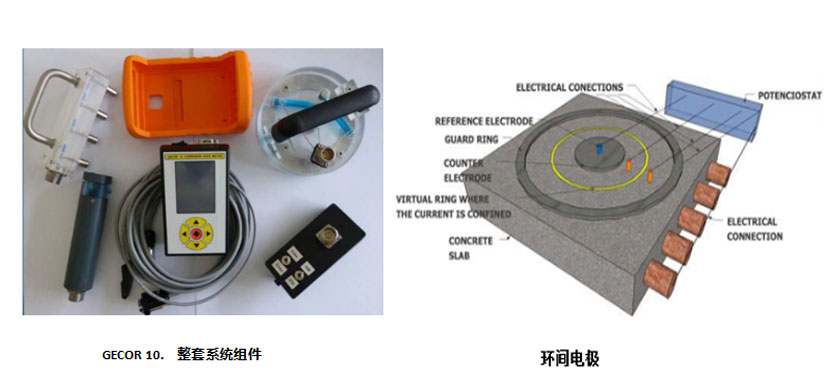
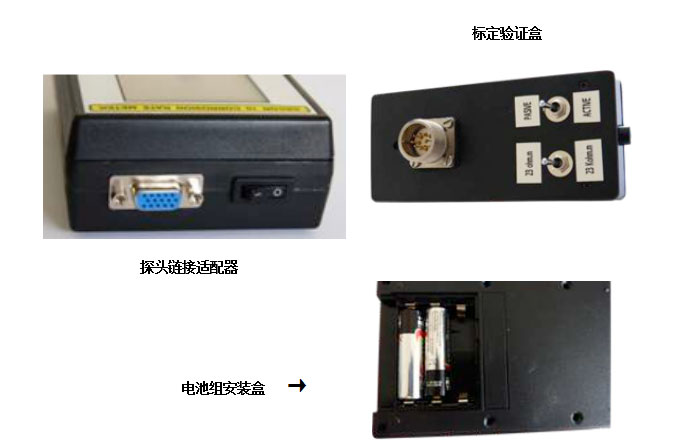
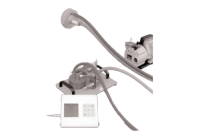
Probe: The GECOR 10 full system includes three probes in direct contact configuration. Ring probe for corrosion rate measurement by AMCT. It can be made of a black material or a transparent polymer, which allows for better control over the electrolyte and electrical connections and contacts. Maintenance and cleaning can be done easily by the user. This ring probe makes electrical contact between the central unit and the rebar and consists of the following components: Two auxiliary electrodes, a circular center electrode and Concentric guard rings; guard rings limit the current applied to the center electrode. Two reference electrodes for controlling the outer guard ring applied current. These electrodes are placed between a central circular electrode and concentric rings.
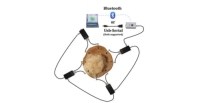
All probes are connected to the central unit through a hub. The hub is also used to connect the device to a PC for use in "remote control" mode. This new GECOR 10 has been designed and developed to have very low power consumption, in this way it can be powered by a standard 1.5V primary battery or a 1.5V rechargeable battery. Not relying on an external power source, which is key to working in the field. |