

|
Automatic Soil Pore Size Analyzer
Collect
PRODUCT DESCRIPTION
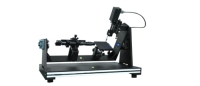
Product description: Mercury porosimetry is based on the method of forcing mercury into the pore structure under precisely controlled pressure. In addition to being fast, accurate, and having a wide analytical range, the mercury porosimeter allows the user to calculate numerous sample properties such as: pore size distribution, total pore volume, total pore specific surface area, median pore size, and sample density (bulk density and skeletal density). ). AutoPore V-Series mercury porosimeters provide faster and more accurate measurements of materials with wide pore size distribution than other methods. While the instrument highlights enhanced safety features, new data processing and reporting options have been added to provide additional information on material pore geometry and fluid permeability. Operation is a bit: It can complete the measurement of the aperture range from 003 to 1100 μm; In the 2psia pressure range, small pressure increments of 0.05psia are available, allowing detailed data acquisition in the large pore range; The high-resolution (sub-microliter) analysis mode can very accurately measure the mercury ingress and egress volume of the sample, allowing users to formulate more stringent sample specifications, improve product processes and obtain high-quality R&D data; Three operating modes: fast scan, time or mercury intrusion rate balance; Real-time diagnostics provide information on issues that are critical or that may compromise analysis results; Collect higher-resolution data, and the volume of mercury injection and removal is accurate to better than 1 μL; Improved way of linearly closing the high pressure tank; Higher levels of safety, reducing the risk of mercury spills and operator exposure to mercury; There are 4 low pressure stations and 2 high pressure stations in total to provide high-throughput sampling; The maximum pressure can be 33,000psia or 60,000psia two models; Low noise high pressure generation system; Fast scan mode allows continuous pressure increase to near equilibrium and provides fast screening; The selection of the baseline correction process (automatic, differential or manual) can correct the compression and thermal effects caused by high pressure, and provide more accurate analysis results; Users have a choice of two boost modes: high analysis speed or scan mode on demand; balanced mode for higher accuracy and more detailed results; Mercury temperature sensor for dilatometer calibration allows automatic calculation of mercury density; MicroActive software allows for interactive manipulation of data, custom reports and quick access to analysis results; Compensates for material compression under high pressure analysis. |