

|
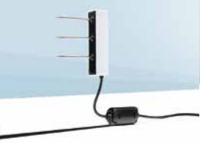
TEROS 21 In Situ Soil Water Potential Sensor
Collect
PRODUCT DESCRIPTION
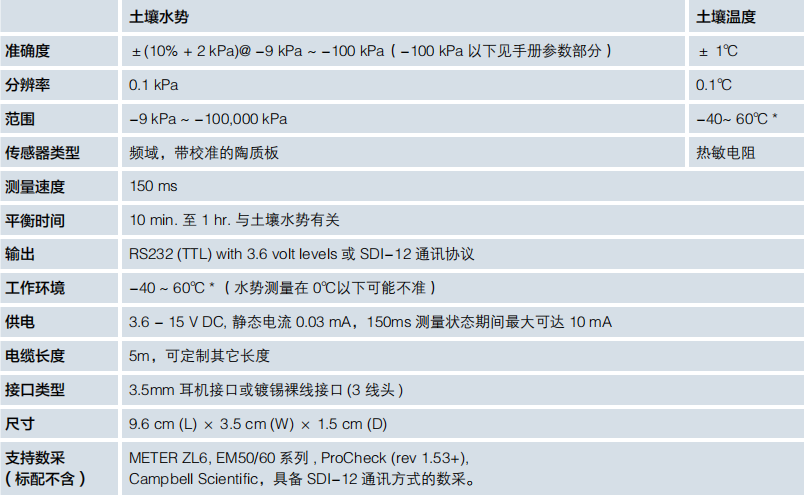
Working principle: The TEROS 21 sensor consists of a moisture sensor and a porous material with a known moisture release curve. When the porous material and the surrounding soil reach moisture equilibrium, the moisture sensor measures the moisture content of the porous material and converts the moisture content into water potential according to the moisture release curve. . Main feature: Accuracy is greatly improved: with 6-point calibration, an automatic calibration device is used to calibrate the sensors one by one. Guaranteed comparability of results between TEROS 21 sensors and with other water potential measurement methods. Robust: The epoxy overmolding process ensures that it is suitable for long-term monitoring studies in the field. No recalibration required: Silica-based ceramic materials do not suffer from drift due to degradation. Salt insensitivity: Soil sensors with variable salinity levels are accurate even in high salinity environments. Superior measurement range: Wet soils (-9 kPa) to air-dried soils (-100,000 kPa) can be measured with good accuracy, especially above the field wilting point. Incidental temperature measurement: Another important indicator of plant growth can be obtained at the same time. Plug and Play: Just bury the sensor, connect the data collector, set the clock and measurement interval, and start collecting data. No programming required. Remote access to data: When using the TEROS 21 to connect to the ZL6 data acquisition, you can access data via the Internet. Compatible with SDI-12: TEROS 21 is compatible with almost all mainstream digital acquisitions that support SDI-12, using a common communication protocol. Technical indicators: Sensors can also be used in higher temperature environments in some cases. Contact METER for more information if required.
RELATED PRODUCTS
|