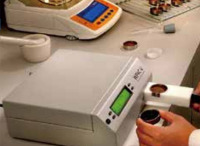
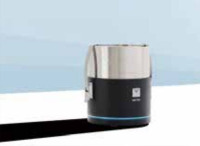
Working Principle:
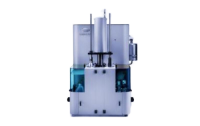
Generally, a Soil Particle Size Distribution Observation System consists of the following components: an optical path system, sample dispersion system, operation control system, light intensity detection system, and data transmission and processing system. A monochromatic, coherent, and parallel beam emitted by a solid-state laser source passes through a beam processing unit and irradiates the sample particles, causing scattering phenomena. The scattered light is focused by a Fourier lens and forms an image on a series of detectors. The energy distribution of the scattered light is directly related to the particle size distribution. Through the data processing system and by selecting an appropriate theoretical model, the particle size distribution results of the measured sample are obtained.
Technical Features:
Patented Technology: Patented fixed-position Tri-Laser solid-state light source design with no moving parts. A classical Fourier optical path combined with dual receiving lenses enables real-time, wide-angle collection of particle diffraction/scattered light signals.
Optical Signal Detection: Eliminates the need for scanning. Real-time, synchronous collection of full-range scattered light signals ensures high reproducibility of measurement results and high resolution across the entire measurement range.
Accuracy: Pioneered the introduction of "non-spherical" particle correction factors. Features a built-in optical database for common analytical materials, enhancing the accuracy of test results.
Ultra-Wide Measurement Range: "Bluewave" laser technology provides an optimal solution, ensuring the stability of large-angle scattered light signals. This allows the lower measurement limit to reach 0.01 µm, improving the accuracy and resolution of the measurement zone.
Fully Automated Operation: The system performs automatic optical alignment, fully automated background detection, automatic dilution, automatic measurement, and automatic cleaning. The user-friendly interface is simple and practical, minimizing the influence of human factors.
Enhanced Dry Feeder: The newly improved dry dispersion jet feeder (as of 2008) offers a maximum dispersion pressure of 8 atm. Upon completion of measurement, it automatically performs backflush cleaning of the pipelines, ensuring good result reproducibility.
Certification: Designated instrument for NIST (National Institute of Standards and Technology) standard reference material certification.